KYC (Know Your Customer) verification is a mandatory requirement for all Ghana casinos operating under Gaming Commission rules. This comprehensive compliance framework ensures that gaming operators verify player identities, confirm age eligibility, validate addresses, and assess source of funds to maintain regulatory standards. The process serves multiple critical functions including fraud prevention, anti-money laundering (AML) compliance, and responsible gambling protection for Ghanaian players.
Ghana casinos accept various document types for KYC verification, with local options like the Ghana Card playing a central role alongside internationally recognized documents such as passports and driving licenses. Understanding which documents are accepted and how to submit them properly can significantly streamline your verification experience and ensure faster account approval at both local and offshore gaming platforms serving Ghana.
How KYC Works at Ghana Casinos Under Gaming Commission Rules
The Ghana Gaming Commission enforces strict KYC requirements to ensure all licensed operators maintain robust verification systems that comply with international AML standards and anti-fraud frameworks. These regulations require casinos to implement comprehensive identity verification processes that protect both players and the integrity of Ghana’s gaming industry. Licensed operators must verify every player’s identity, age, and address before allowing full account access, with additional source-of-funds checks triggered for high-value transactions or suspicious activity patterns.
Casinos operating in Ghana must maintain detailed records of all verification attempts and outcomes, with regular audits ensuring compliance with Gaming Commission standards. The regulatory framework also mandates that operators use secure, encrypted systems for document storage and processing, protecting player data throughout the verification process. Non-compliance with these KYC requirements can result in significant penalties, license suspension, or complete revocation of operating permissions.
For players, this regulatory oversight provides assurance that their personal information is handled securely and that the casino operates under legitimate business practices. The Gaming Commission’s enforcement of KYC standards also helps prevent underage gambling, money laundering, and identity fraud within Ghana’s gaming ecosystem. Understanding these regulatory requirements helps players appreciate why thorough documentation is necessary and why casinos cannot bypass verification procedures.
Legal obligations for Ghana-licensed casinos
Ghana-licensed casinos must comply with comprehensive legal obligations that extend beyond basic identity verification to include ongoing monitoring of player activities and transactions. The Gaming Commission requires operators to implement risk-based approaches to KYC, meaning higher-risk players or transactions trigger additional verification requirements. These obligations ensure that casinos contribute to Ghana’s broader financial crime prevention efforts while maintaining fair and transparent gaming environments.
Licensed operators must also provide regular compliance reports to the Gaming Commission, detailing their KYC procedures, rejection rates, and any suspicious activities identified during the verification process. This regulatory oversight creates a framework of accountability that protects both individual players and the broader integrity of Ghana’s gaming market. Casinos that fail to meet these legal obligations face escalating penalties that can ultimately result in the loss of their operating license.
The legal framework also requires casinos to maintain updated KYC procedures that reflect evolving international standards and technological capabilities. This means that verification processes may become more sophisticated over time, incorporating new document types or verification methods as they become available and regulatorily approved in Ghana.
KYC steps from a Ghanaian player’s perspective
- Complete initial registration with basic personal information including full name, date of birth, address, and contact details that match your official identification documents
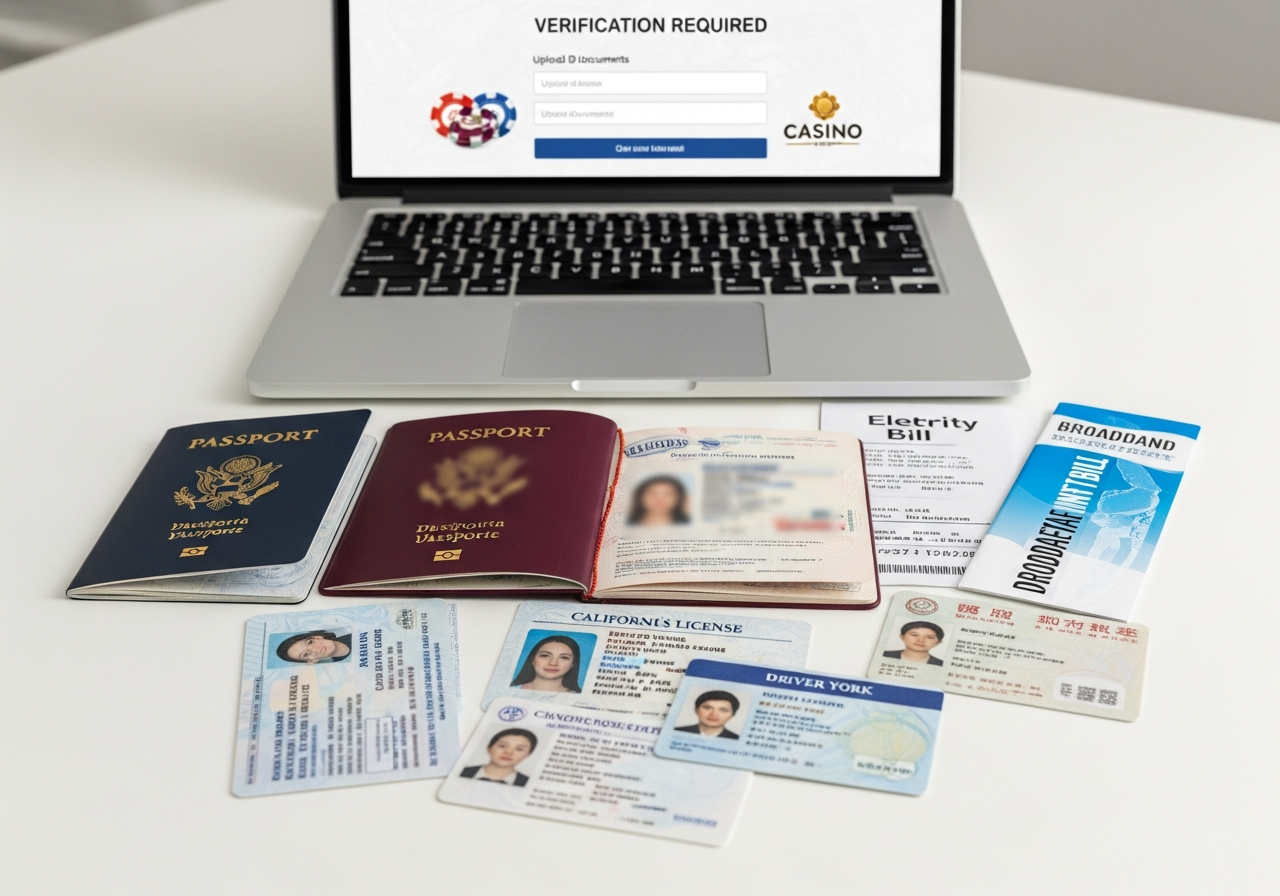
- Upload required identity documents such as Ghana Card, passport, or driver’s license along with proof of address documentation like utility bills or bank statements
- Submit additional verification materials if requested, including selfies with ID documents, video calls, or enhanced source-of-funds documentation for large deposits
- Wait for casino verification team review, which typically takes 24-72 hours for standard documents but may extend longer for complex cases or additional checks
- Respond promptly to any verification team requests for clarification, additional documents, or corrections to ensure smooth processing
- Receive final approval notification and gain full access to casino features including withdrawals, higher deposit limits, and premium services
Core Types of ID Documents Accepted by Ghana Casinos
Ghana casinos accept a comprehensive range of identity documents designed to accommodate both local players and international visitors. The verification strength and processing speed vary significantly depending on the document type, with government-issued photo identification providing the highest level of verification confidence. Understanding which documents offer the best combination of acceptance rates and processing efficiency can help players choose the most effective verification approach for their specific circumstances.
Most casinos prioritize documents that include clear photographs, official government seals, and machine-readable elements that can be verified through automated systems. The choice of ID document can also impact the additional verification requirements, with some documents triggering requests for supplementary materials while others provide sufficient verification on their own.
Local Ghana casinos often show greater flexibility with locally-issued documents, while offshore operators may have stricter requirements favoring internationally recognized identification. Players should consider their preferred gaming platforms when selecting which documents to submit for verification.
| Document type | Issued by | Typical use (online / land-based) | Strength of verification | Notes for Ghana players |
|---|---|---|---|---|
| Ghana Card | National Identification Authority | Both online and land-based | Very High | Most widely accepted by Ghana casinos |
| Passport | Passport Office Ghana | Preferred for online casinos | Very High | Best for offshore casino verification |
| Driving License | Driver and Vehicle Licensing Authority | Both online and land-based | High | Good alternative to Ghana Card |
| Voter ID Card | Electoral Commission | Mainly land-based casinos | Medium | Limited acceptance online |
| National Service ID | National Service Secretariat | Limited acceptance | Medium | Usually requires additional ID |
| SSNIT Card | Social Security Trust | Rare acceptance | Low | Not recommended as primary ID |
| Birth Certificate | Births and Deaths Registry | Supporting document only | Low | Used for age verification support |
Why government-issued photo ID is the gold standard
Government-issued photo identification documents like passports and Ghana Cards represent the gold standard for casino KYC verification due to their sophisticated security features and official authentication mechanisms. These documents undergo rigorous issuance processes that include background checks, biometric data collection, and secure printing technologies that make them extremely difficult to forge or manipulate. Casinos can confidently verify the authenticity of these documents through both automated systems and manual review processes.
The reliability of government-issued photo IDs extends beyond their security features to include comprehensive personal information that matches exactly what casinos need for KYC compliance. These documents typically contain full legal names, dates of birth, current photographs, and unique identification numbers that can be cross-referenced with official databases when necessary. This comprehensive information package allows casinos to complete thorough verification with a single document submission in many cases.
Furthermore, government-issued photo IDs carry legal weight that provides additional protection for both players and casinos in the event of disputes or regulatory inquiries. The official nature of these documents means that any discrepancies or issues can be resolved through established governmental channels, providing clear paths for verification and authentication that protect all parties involved in the gaming transaction.
Using Ghana Card and National IDs for Casino KYC
The Ghana Card has become the preferred identification document for casino KYC verification across the country, offering players the most straightforward path to account approval at both local and offshore gaming platforms. This biometric national ID card contains advanced security features including digital photographs, fingerprint data, and unique identification numbers that can be verified through official channels. Most Ghana-licensed casinos have optimized their verification systems specifically for Ghana Card processing, resulting in faster approval times and fewer document requests for players using this ID type.
Ghana Card verification typically requires only front and back images of the card along with a matching selfie, making it one of the most convenient options for online casino KYC processes. The card’s standardized format and security features allow automated verification systems to quickly authenticate the document and extract necessary information for compliance purposes. Players who submit clear, high-quality images of their Ghana Card often receive verification approval within 24 hours at most reputable casinos.
However, some international casino operators may still request additional documentation even when Ghana Card is provided, particularly for enhanced KYC checks or large transaction verification. Understanding when and why casinos might require supplementary documents helps players prepare comprehensive verification packages that avoid delays and repeated submission requests.
The integration of Ghana Card into casino verification systems reflects the broader digital transformation of identity verification in Ghana’s financial services sector. As more gaming operators adopt advanced verification technologies, the Ghana Card’s biometric capabilities and official database connections make it an increasingly powerful tool for secure, efficient player verification across all types of gaming platforms.
Best practices for submitting Ghana Card online
- Capture clear, high-resolution images of both front and back of the Ghana Card under good lighting conditions, ensuring all text and security features are clearly visible
- Verify that the personal information on your Ghana Card exactly matches the registration details you provided to the casino, including spelling and formatting
- Take a current selfie holding your Ghana Card next to your face, ensuring both your features and the card details are clearly visible in the same frame
- Upload images in accepted file formats (typically JPG or PNG) with file sizes between 1-5MB to ensure quick processing without quality loss
- Avoid using flash photography which can create glare on the card’s surface, potentially obscuring important security features or text
- Submit all required images simultaneously rather than piecemeal to allow verification teams to process your complete documentation package efficiently
When casinos might still ask for a passport
Even with a valid Ghana Card submission, some casinos may request passport verification for specific circumstances including large deposit transactions exceeding $1,000, withdrawal requests above certain thresholds, or when enhanced due diligence procedures are triggered by unusual account activity. International casino operators often prefer passports because their verification systems are optimized for globally standardized travel documents rather than national identification cards from specific countries.
Offshore casinos serving Ghana frequently request passports as part of their standard verification procedures, particularly when players attempt to access VIP services, high-roller programs, or premium gaming features that require the highest level of identity confirmation. The international recognition and standardized security features of passports provide these operators with additional confidence in player verification, especially when processing cross-border transactions or dealing with regulatory requirements from multiple jurisdictions.
Passports, Driving Licences and Other Government IDs
- Passports offer the highest international recognition and acceptance rates across all casino types, making them ideal for players who use multiple gaming platforms
- Ghana driving licenses provide excellent verification strength for domestic casinos and include address information that can satisfy both identity and residence requirements
- Voter ID cards from Ghana’s Electoral Commission are widely recognized locally but may face limitations with international casino operators
- National Service ID cards typically require supplementary documentation due to limited security features and temporary validity periods
- SSNIT cards are rarely accepted as primary identification but can serve as supporting documentation for enhanced verification processes
- Military or police identification cards may be accepted by some operators but often trigger additional verification procedures due to security sensitivities
- Professional licensing documents from regulatory bodies can support identity verification but rarely qualify as standalone identification for casino KYC purposes
Choosing the best ID document for fast approval
Passport verification consistently delivers the fastest approval times at international casino operators due to standardized global recognition systems and automated processing capabilities that can verify document authenticity within minutes rather than hours. The international standardization of passport security features allows casino verification systems to quickly authenticate these documents without manual review in most cases, leading to same-day account approval for players with clear, valid passport submissions.
Ghana Card verification offers the best speed advantage at locally-licensed casinos where verification systems have been specifically calibrated for this document type, often providing approval within 24 hours when submitted properly. The biometric features and official database connections available for Ghana Card verification give local operators additional confidence in quick approval decisions, particularly for standard account verification without enhanced checks.
Driving license verification typically falls between passport and Ghana Card in terms of processing speed, offering good international recognition while maintaining local relevance that resonates with both domestic and offshore casino operators. The inclusion of address information on driving licenses can also streamline the overall KYC process by satisfying multiple verification requirements with a single document submission, reducing overall processing time even if initial document review takes slightly longer.
Proof of Address Documents Accepted by Ghana Casinos
Address verification represents a critical component of casino KYC processes, with casinos accepting various document types that demonstrate players’ current residential addresses and establish their connection to Ghana’s financial and utility systems. The acceptability and processing requirements for address documents vary significantly between local and offshore casino operators, with local casinos often showing greater flexibility for Ghana-specific utility companies and service providers.
Document age requirements typically range from 3-6 months maximum, with most casinos requiring recent documentation that demonstrates current residence rather than historical address information. Players should ensure their address documents display clear property addresses that match exactly with their registration information, as even minor discrepancies can trigger additional verification requirements or document rejections.
The digital transformation of Ghana’s utility and financial services sectors has expanded the range of acceptable address documents to include mobile money statements, digital bank statements, and electronic utility bills that may not have been accepted in traditional verification processes. Understanding which document types offer the best combination of acceptance rates and processing efficiency helps players choose optimal address verification strategies for their preferred gaming platforms.
| Document type | Issuer (example) | Maximum age (months) | Online vs land-based usage | Common reasons for rejection |
|---|---|---|---|---|
| Utility Bills | ECG, Ghana Water, Surfline | 3 | Both preferred | Poor image quality, outdated bills |
| Bank Statements | GCB Bank, Ecobank, Stanbic | 3 | Both accepted | Missing address, informal statements |
| Mobile Money Statements | MTN MoMo, AirtelTigo Money | 3 | Limited online acceptance | Incomplete address information |
| Rental Agreements | Private landlords, estate agents | 12 | Good for both | Informal agreements, no signatures |
| Council Tax/Rates | Local Government Assemblies | 6 | Excellent for both | Unofficial receipts, poor documentation |
| Insurance Documents | GLICO, Vanguard, SIC Insurance | 6 | Mixed acceptance | Policy documents without address |
| Employment Letters | Government offices, corporations | 6 | Limited acceptance | Work address instead of home address |
Differences in address checks for local vs offshore casinos
Local Ghana-licensed casinos typically demonstrate greater flexibility in accepting Ghana-specific address documents, including utility bills from regional providers, mobile money statements showing residential addresses, and local government assembly documentation that may not be familiar to international operators. These domestic casinos often have verification teams with local knowledge that can authenticate Ghana-specific utility companies, local council formats, and regional service providers that offshore operators might reject due to unfamiliarity.
Offshore casinos serving Ghana generally maintain stricter document requirements that favor internationally recognized address verification methods such as bank statements from major international banks, utility bills from well-known multinational utility companies, or rental agreements that follow standardized formats. These operators often rely on automated verification systems that may not recognize Ghana-specific service providers or local document formats, leading to higher rejection rates for locally-issued address documents and requests for alternative documentation types.
Handling players without formal proof of address
- Request official bank letters from your financial institution confirming your residential address, which carry significant weight with casino verification teams
- Obtain mobile money statements from MTN MoMo or AirtelTigo that display your registered address information, though acceptance varies by casino
- Secure a landlord declaration letter with official letterhead and contact information if you rent accommodation without formal lease agreements
- Use employment address verification letters from established employers, though these may require additional supporting documentation
- Consider opening a basic bank account specifically to generate address-verified statements if other options remain unavailable
- Contact casino customer support to discuss alternative verification methods before submitting documents, as some operators offer flexible solutions for unique circumstances
Income, Source-of-Funds and Enhanced KYC Checks
Enhanced KYC procedures represent the most comprehensive level of casino verification, triggered by specific player activities, transaction patterns, or regulatory requirements that necessitate deeper investigation into players’ financial backgrounds and gaming intentions. These procedures extend far beyond basic identity and address verification to include detailed analysis of income sources, wealth origins, and the legitimacy of funds being used for gambling activities. Ghana Gaming Commission regulations require operators to implement risk-based enhanced KYC when certain thresholds or suspicious activity patterns are identified.
Source-of-funds verification requires players to provide comprehensive documentation proving the legitimate origin of money being deposited into their casino accounts, including employment contracts, business registration documents, investment statements, or inheritance documentation depending on the claimed income source. This process can be particularly complex for players with multiple income streams, business ownership, or irregular income patterns that don’t fit standard employment verification models.
The enhanced KYC process typically involves extended verification timelines ranging from 5-14 days, detailed questionnaires about financial circumstances, video verification calls with compliance officers, and ongoing monitoring of account activity even after approval. Players subject to enhanced checks often find their accounts temporarily restricted during the verification process, with deposit and withdrawal limits imposed until the review is completed satisfactorily.
Understanding when enhanced KYC might be triggered helps players prepare appropriate documentation and set realistic expectations for verification timelines, particularly when planning significant gambling activities or large financial transactions that could cross regulatory thresholds requiring additional scrutiny.
When Ghana casino players can expect enhanced checks
- Large single deposits exceeding $5,000 or cumulative deposits over $10,000 within a 30-day period that trigger AML monitoring thresholds
- Unusual winning patterns or large withdrawal requests that appear inconsistent with the player’s stated income level or deposit history
- Discrepancies between stated employment information and actual deposit patterns that suggest undeclared income sources or financial circumstances
- Multiple account registrations using similar personal information, payment methods, or IP addresses that trigger fraud prevention protocols
- High-risk jurisdiction connections including payments from or travel to countries with elevated money laundering risks or gaming restrictions
Digital KYC: Selfies, Biometrics and Third-Party Verification
Digital verification technologies have revolutionized casino KYC processes by introducing automated authentication methods that provide faster processing times and enhanced security compared to traditional manual document review systems. Modern Ghana casinos increasingly rely on selfie verification, biometric matching, and third-party verification services that can authenticate player identities within minutes rather than days. These technologies use advanced facial recognition algorithms, document authentication databases, and real-time verification APIs to streamline the player onboarding experience while maintaining regulatory compliance standards.
Biometric verification systems can cross-reference player selfies against their submitted identification documents to ensure the same person is present in both images, providing an additional layer of security against identity fraud and account takeover attempts. Some advanced systems also incorporate liveness detection technology that requires players to perform specific actions during selfie capture, preventing the use of static photographs or deepfake imagery in verification attempts.
Third-party KYC providers specializing in African markets have developed verification capabilities specifically calibrated for Ghana Card authentication, passport recognition, and local document formats that may not be supported by global verification platforms. These specialized providers often offer faster processing times for Ghana-specific documents and better recognition rates for local identity formats, leading to improved approval rates and reduced verification friction for Ghanaian players.
| Verification method | What the casino requests | Technology used | Benefits | Potential issues for players |
|---|---|---|---|---|
| Document + Selfie | Photo holding ID next to face | Facial recognition matching | Fast automated processing | Poor lighting causes rejections |
| Liveness Detection | Blink, smile, or turn head on command | AI movement analysis | Prevents photo spoofing | Technical difficulties with instructions |
| Video Call Verification | Live video chat with agent | Human verification specialist | Handles complex cases | Language barriers, scheduling conflicts |
| Biometric Scanning | Fingerprint or facial scan | Biometric database matching | Highest security level | Requires compatible devices |
| Third-Party API | Standard document upload | External verification service | Specialized local document knowledge | Data shared with third parties |
Avoiding common problems with selfie and video checks
- Use natural lighting from a window or well-lit room rather than artificial lighting that can create shadows or color distortion affecting facial recognition accuracy
- Ensure stable internet connection before starting video verification calls to prevent disconnections that may require restarting the entire verification process
- Position your ID document clearly beside your face during selfie capture, ensuring both your features and document details are equally visible and in focus
- Follow liveness detection instructions precisely and wait for confirmation before moving, as premature movements can trigger verification failures
- Clear your browser cache and disable VPN connections during digital verification to avoid technical conflicts with verification systems
- Have backup lighting sources available and test your camera quality beforehand to ensure optimal image capture conditions
How third-party KYC providers handle Ghana ID documents
Specialized third-party KYC providers serving the Ghana market have developed sophisticated document recognition systems specifically trained on Ghana Card security features, passport formats, and local utility company documentation styles. These systems use machine learning algorithms that have been fed thousands of authentic Ghana documents to recognize genuine security features, fonts, layouts, and official seals that distinguish legitimate documents from fraudulent attempts. The automated systems can typically verify Ghana Card authenticity within 30-60 seconds by cross-referencing security features against known patterns.
Advanced providers also maintain connections to official Ghana government databases where legally permissible, allowing real-time verification of ID numbers, expiration dates, and issued status for certain document types. This database integration provides additional verification confidence beyond visual document inspection, particularly valuable for high-value transactions or enhanced KYC requirements where maximum verification certainty is required.
Age Verification and Responsible Gambling Controls
- Mandatory age verification ensures all players meet Ghana’s minimum gambling age of 18 years through document-based confirmation and database cross-referencing
- Real-time age calculation systems automatically flag accounts where submitted birthdates indicate underage status, immediately restricting gambling access
- Responsible gambling integration links age verification with deposit limits, session controls, and self-exclusion tools appropriate for different age demographics
- Enhanced monitoring for players aged 18-21 includes additional verification requirements and stricter responsible gambling tool recommendations
- Automated systems flag discrepancies between stated ages and document birthdates, triggering manual review processes to resolve inconsistencies
- Family protection measures include database checks against known family member accounts to prevent circumvention of parental gambling restrictions
- Regular re-verification requirements ensure continued age eligibility for players using temporary or expiring identification documents
What happens if age or identity cannot be verified
Players whose age or identity cannot be adequately verified through submitted documentation face immediate account restrictions that prevent all gambling activities, including deposits, gameplay, and withdrawal processing until verification issues are resolved satisfactorily. The casino typically freezes the account balance and provides a specific timeline, usually 30-90 days, for the player to submit acceptable verification documents or clarify discrepancies that prevented initial approval.
If verification cannot be completed within the specified timeframe, Gaming Commission regulations require casinos to close the account permanently and return deposited funds to the original payment method after deducting any applicable fees or charges. However, any winnings accumulated before proper verification may be forfeited under regulatory guidelines, as they were generated while the account was in non-compliant status.
Players facing verification difficulties have appeal rights through casino customer service channels and can ultimately escalate unresolved disputes to the Ghana Gaming Commission for regulatory review. The commission maintains procedures for handling verification disputes, particularly in cases where players claim document submission difficulties or technical problems prevented proper verification completion within required timeframes.
Common KYC Rejection Reasons and How to Fix Them
Understanding the most frequent causes of KYC rejection empowers players to avoid common pitfalls and prepare documentation packages that meet casino verification standards on the first submission attempt. Document quality issues represent the leading cause of verification failures, with poor image resolution, unclear text, or missing document sections accounting for over 60% of initial rejections at most Ghana casinos. Players who understand specific quality requirements and technical specifications can significantly improve their approval chances and reduce verification timelines.
Information mismatches between registration data and submitted documents create another major category of verification problems, particularly when players use informal name variations, outdated addresses, or inconsistent personal details across different documents. These discrepancies often require additional documentation or manual review processes that extend verification timelines and may trigger enhanced KYC procedures.
Technical submission errors, including incorrect file formats, oversized images, or incomplete document packages, frequently result in automatic rejections before human review occurs. Understanding the technical requirements and systematically checking submission completeness before upload can eliminate many preventable rejection scenarios that frustrate players and delay account approval.
| Problem | Typical cause | Impact on account | How to resolve | Prevention tip |
|---|---|---|---|---|
| Blurry document images | Poor camera focus, low resolution | Verification on hold | Retake photos with better focus | Use good lighting, clean camera lens |
| Name mismatch | Registration vs ID spelling differences | Account restricted | Update account details or provide name change docs | Match registration exactly to ID |
| Expired documents | Using outdated ID or address proof | Immediate rejection | Submit current, valid documents | Check expiration dates before upload |
| Incomplete address visible | Cropped or partially obscured address | Address verification fails | Submit full document showing complete address | Capture entire document in frame |
| Wrong file format | Using unsupported file types | Upload fails | Convert to JPG or PNG format | Check format requirements first |
| Document too old | Address proof exceeds 3-month limit | Verification pending | Provide recent utility bill or statement | Use documents within 90 days |
| Partial document submission | Missing required document types | Verification incomplete | Submit all requested document categories | Review requirements checklist thoroughly |
| Selfie quality issues | Poor lighting, unclear facial features | Identity verification fails | Retake selfie with proper lighting | Use natural light, face camera directly |
When to escalate KYC issues with support or regulator
- Contact casino customer support immediately if verification remains pending beyond stated processing timeframes (typically 72 hours for standard verification)
- Request escalation to senior verification specialists when multiple document resubmissions are rejected without clear explanation of specific problems
- Document all communication attempts with casino support including reference numbers, agent names, and timestamps for potential regulatory complaints
- File complaints with Ghana Gaming Commission when casinos fail to respond to support requests within 14 days or provide inadequate resolution attempts
- Seek legal advice for cases involving significant funds held during prolonged verification disputes, particularly when compliance appears unreasonable or discriminatory
Protecting your data during KYC
Enable two-factor authentication on your casino account before uploading any KYC documents to prevent unauthorized access during the verification process, particularly important given the sensitive personal information being shared with the operator. Use only official casino websites and mobile applications for document upload, avoiding third-party services or unverified links that could compromise your personal identification data or lead to identity theft.
Store digital copies of submitted KYC documents in secure, encrypted storage solutions rather than leaving them accessible on devices or cloud services that could be compromised, and consider watermarking uploaded documents with the specific casino name and submission date to prevent unauthorized reuse of your identification materials by bad actors or competing services.
Comparing KYC Experiences: Local vs Offshore Ghana Casinos
The verification experience varies significantly between Ghana-licensed operators and offshore casinos serving Ghanaian players, with local operators generally offering more streamlined processes for Ghana-specific documents and faster processing times due to their familiarity with local identification formats. Local casinos typically staff verification teams with Ghana-based personnel who understand local document types, utility company formats, and cultural considerations that may impact the verification process, leading to higher acceptance rates and fewer communication barriers during verification review.
Offshore operators often maintain more standardized global verification procedures that may not accommodate Ghana-specific document variations or local banking formats, potentially leading to longer processing times and higher rejection rates for players using locally-issued proof of address or income documentation. However, these operators frequently offer more sophisticated digital verification technologies and may provide 24/7 verification support across multiple time zones, benefits that can offset their reduced familiarity with Ghana-specific documentation.
Regulatory oversight differs substantially between the two operator categories, with local casinos subject to direct Ghana Gaming Commission supervision while offshore operators may fall under different regulatory frameworks that provide varying levels of player protection and dispute resolution mechanisms for verification-related issues.
| Aspect | Ghana-licensed casinos | Offshore casinos serving Ghana | What it means for players |
|---|---|---|---|
| Document acceptance rates | High for Ghana Card, local utilities | Prefer international documents | Local casinos easier for Ghana documents |
| Processing timeframes | 24-48 hours typically | 2-7 days standard | Faster approval with local operators |
| Support language options | English, local languages available | Primarily English only | Better communication with local staff |
| Regulatory oversight | Ghana Gaming Commission direct | Foreign regulators, limited local oversight | Local regulators easier to contact |
| Enhanced KYC triggers | Higher thresholds, local context | Lower thresholds, stricter policies | Less likely to face enhanced checks locally |
| Technology sophistication | Growing but limited automated systems | Advanced AI and biometric systems | Offshore offers more digital options |
Choosing safer casinos based on KYC quality
- Prioritize casinos with clear, detailed KYC policies published on their websites that specify exact document requirements, processing timeframes, and appeal procedures
- Select operators using encrypted document upload portals with SSL certification and secure data storage practices clearly outlined in their privacy policies
- Choose casinos with responsive customer support teams that can provide specific guidance about Ghana document requirements before submission
- Favor operators with established complaint resolution procedures and regulatory oversight from recognized gaming authorities with enforcement capabilities
- Verify that chosen casinos maintain appropriate data protection certifications and comply with international standards for sensitive information handling
- Research casino verification processing times through player reviews and forums to identify operators with consistently reliable KYC experiences for Ghana players
Step-by-Step Checklist to Pass KYC Fast at Ghana Casinos
Successfully completing casino KYC verification on the first attempt requires systematic preparation and attention to technical details that can make the difference between rapid approval and frustrating delays. This comprehensive checklist addresses each stage of the verification process, from initial document preparation through final submission and follow-up, ensuring players maximize their chances of swift account approval while avoiding common pitfalls that lead to rejection or additional document requests.
Following this structured approach typically reduces verification timeframes from the industry average of 3-7 days to 24-48 hours for most Ghana casino operators, particularly when combined with high-quality document preparation and complete information accuracy across all submission components.
- Verify that all personal information in your casino account profile exactly matches your identification documents, including spelling, formatting, and address details
- Prepare high-resolution digital copies of required documents using proper lighting and ensure all text, photos, and security features are clearly visible without shadows or glare
- Confirm that your chosen documents are current and within validity periods, with address proof documents dated within the last 3 months for most operators
- Take a clear, well-lit selfie holding your primary ID document next to your face, ensuring both your features and document details are equally sharp and readable
- Check file formats and sizes meet casino specifications (typically JPG or PNG, 1-5MB) before uploading to avoid technical rejection issues
- Submit all required document categories simultaneously rather than piecemeal to enable complete package review by verification teams
- Monitor your email and casino account for verification status updates and respond promptly to any requests for additional information or clarification
- Contact customer support proactively if verification exceeds stated processing timeframes to ensure your submission wasn’t lost or delayed in processing queues
- Keep digital copies of all submitted documents and correspondence for your records in case resubmission or dispute resolution becomes necessary
What to do after KYC approval
Once verification is complete, immediately update any personal information that may have changed since initial account registration, including address changes, contact information updates, or employment status modifications that could impact future verification requirements. Proactively maintaining current account information prevents complications during withdrawal processing or enhanced KYC procedures that may be triggered by significant account activity.
Consider downloading and securely storing your verification approval confirmation along with records of submitted documents, as these materials may be useful for expediting verification processes at other gaming platforms or resolving any future account access issues that could arise from technical problems or system updates at your chosen casino.